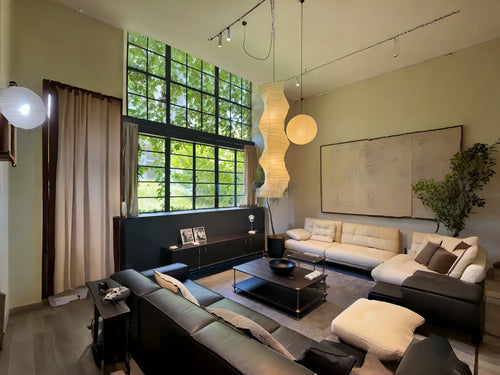

A flush ceiling light sits close to the ceiling, while a semi flush fitting has a short visible drop between the ceiling and the main light body. For a lower room, compare their total installed depth before deciding by style. A shallow flush fitting can preserve useful headroom; a compact semi flush design can add shape if the room has space for it.
Neither label guarantees the right fit or a particular quality of light. A broad diffuser, an open shade and several exposed bulbs behave differently, even when they use similar mounting arrangements. The practical choice comes from checking the fitting's dimensions, the view from your seats and the activities underneath it.
Understand what the two names describe
Flush fittings generally keep the main body close against the ceiling. They still have depth: a glass bowl or layered shade can extend noticeably below the mounting surface. The word flush describes the relationship to the ceiling, not a promise that the light is almost flat.
A semi flush ceiling light usually uses a short stem or similar support to hold the shade below the ceiling. That gap becomes part of the design. Depending on the shade and the direction of the bulbs, it may also let some light reach the ceiling above.
Retail categories are useful starting points, but drawings are more precise. When browsing Orangme ceiling lights, look for the complete height or installed drop of each selected model. If the listing only gives the shade height, ask whether the canopy and supporting parts are included.
Measure the whole drop from the finished ceiling
Measure from the finished floor to the finished ceiling at the proposed position. A lowered section, beam or slope may make that location different from the centre of the room. If the floor or ceiling is being replaced, use the intended finished levels when discussing the light with the installer.
Then subtract the fitting's total installed drop. For an illustrative 240 cm ceiling, a light that extends 12 cm below it leaves 228 cm beneath the fitting. A 28 cm total drop leaves 212 cm. That 16 cm difference is substantial, although both lights might appear in a category for lower ceilings.
These numbers describe the geometry of an example room. Check the resulting space against the people and movements in your home, the manufacturer's instructions and the installer's assessment. Reaching up to put on a jumper, carrying furniture and walking under the fitting are different from standing still beneath it.
Include the lowest part in the measurement. A decorative finial or projecting bulb can sit below the main shade. Avoid planning around the shortest visible component and discovering the extra depth after delivery.
Let the route through the room influence the choice
In a hallway, you may walk directly beneath the light several times a day. Near a tall cupboard, an opening door may enter the same space. In a bedroom, the route around the bed can matter more than the empty area above its centre.
Draw the fitting's position on a simple room plan and add the furniture you actually use. Mark cupboard doors in their open positions. A semi flush light may fit comfortably over a settled seating area but feel intrusive beside a route where people frequently pass.
Over a dining table, check the seated view as well as the standing space nearby. A light centred over today's table may end up over a walkway after the table is moved. If the room regularly changes between dining, work and entertaining, a shallower fitting offers more flexibility.
Compare width as carefully as height
A low profile does not have to mean a tiny light. A wider, shallower fitting can give a room a clear decorative feature without a long drop. Conversely, a small light with a deep globe can occupy more headroom than a larger-looking flat design.
Use a paper circle or outline to judge the proposed width from the floor. Compare its scale with the ceiling, nearby cornice and the furniture below. If you make a mock-up, keep it separate from the electrical fitting and use a helper to hold a lightweight shape safely for viewing.
Check the canopy size too. It needs to work with the mounting arrangement, and its outline may reveal old paint marks or an existing ceiling rose. Ask the installer how those details will be resolved. Choosing a fitting just to hide a mark can leave you with the wrong proportions for years.

The visible gap is only part of the measurement; include the canopy, stem and full shade.
Look at where the light will travel
An opal or other diffusing cover can spread the appearance of the light source across a larger visible surface. An open metal shade may send much of its light downwards. A clear globe can leave the bulb directly visible. These differences deserve attention alongside the flush or semi flush label.
A semi flush fitting with an opening above the shade may illuminate part of the ceiling. That can be attractive against a smooth pale surface, but it may also reveal uneven plaster or cast a distinct shadow around the canopy. A different design may send almost no light upwards despite having a visible gap.
Ask to see the fitting switched on, ideally from a similar angle to the way you will see it at home. A product photograph against a white background tells you about the outline, but much less about a bright bulb above the sofa or the pattern on the ceiling after dark.
Judge glare from the places you sit
Sit on the sofa, at the dining table or in bed and look towards the proposed position. An open-bottom shade that hides its bulb from a standing person may expose it from a lower seat. In a bedroom, the view while lying back is especially useful to consider.
If the light source would be conspicuous, investigate a suitable diffuser or a different shade design. Do not assume lowering the brightness will make every exposed light comfortable. The visible source, its position and the contrast with the rest of the room all contribute to the experience.
Check reflections as well. A glossy dining table, framed artwork or television can show a bright reflection from the ceiling light. Try the likely viewing positions before deciding that a darker shade or another finish will solve the problem; the direction of the light may need to change.
Compare brightness and control as a separate decision
Compare light output in lumens rather than treating watts as a brightness rating. Watts describe electrical power use. Where specifications distinguish bulb output from the light leaving the complete fitting, make sure you are comparing like with like, especially when one option has an enclosed diffuser.
A ceiling light can provide the main room illumination without doing every job alone. If you read in one chair, a suitable light near that chair may be more useful than making the entire ceiling fitting brighter. The Orangme floor lamp collection offers another category to compare once that reading position is defined.
If you want dimming, confirm that the exact light source and control are compatible. For a fitting with replaceable bulbs, check the approved bulb type and maximum wattage. When bulbs sit inside a fully enclosed cover, confirm that the selected bulbs are suitable for enclosed use. Integrated LEDs have their own control and servicing requirements.
Plan for cleaning and future maintenance
Before choosing an intricate design, read how its shade or diffuser is accessed. A simple-looking fitting can require several parts to be removed for a bulb change. Ask whether replacement glass, diffusers or other service parts are available, particularly if the shape is unusual.
Think about the place where it will be used. A fitting over a busy dining area may need attention more often than one in a seldom-used guest room. Choose a design whose care instructions you can realistically follow, rather than assuming every glass, painted or metal surface accepts the same cleaner.
Have a registered electrician assess the mounting surface, supply, fixture weight and controls. A sloping ceiling needs a fitting approved for that arrangement; a short stem alone does not establish compatibility. Keep the installation instructions and the exact product details for future maintenance.
Make the comparison in your own room
Imagine a small lounge with a modest ceiling height, a wide sofa and a doorway beside the central lighting position. A shallow opal fitting may preserve a comfortable route while providing a quiet shape overhead. A short-stem semi flush fitting could also work, but its full drop and visible bulb would need checking from the doorway and sofa.
Start with the option that meets those practical conditions, then compare its material and proportions with the room. You may prefer a pale fitting that sits quietly against the ceiling or a darker outline that becomes a deliberate feature. The useful choice is the one whose dimensions and light distribution you can explain before ordering, rather than a label that sounds right for a low ceiling.